An army mental health specialist (MOS 68X) is an enlisted behavioral health professional who works alongside licensed psychologists, psychiatrists, and social workers to deliver front-line psychological care to soldiers and their families. These specialists conduct screenings, provide counseling, manage crises, and coordinate care across a wide range of mental health concerns — all within the unique structure of military life.
Military service asks a great deal from the people who choose it. Long separations from family, combat exposure, constant relocation, and the weight of high-stakes decisions don’t disappear when a deployment ends. The psychological toll of all that accumulates — and left unaddressed, it affects readiness, relationships, and lives. That’s why the role of the mental health specialist that army units rely on isn’t just useful. It’s essential.
This article breaks down what army mental health specialists actually do, the challenges that make their work so critical, and the meaningful difference they make in soldiers’ ability to recover, adapt, and keep going.
What Is an Army Mental Health Specialist?
Defining the Role and Its Distinct Training
Army mental health specialists hold the Military Occupational Specialty designation 68X. They work under the supervision of licensed clinicians but operate as front-line care providers — not just administrative support. Their responsibilities include conducting intake interviews, recording psychosocial and physical data, delivering individual counseling, assisting with psychological testing, and coordinating care for patients with conditions ranging from adjustment disorders to PTSD.
To qualify, candidates need a bachelor’s degree in psychology, counseling, social work, or a related behavioral science field, plus an ASVAB Skilled Technical score of 101 or above. After 10 weeks of Basic Combat Training, they complete approximately 19-20 weeks of Advanced Individual Training at the Medical Education and Training Campus (METC), where coursework covers psychopathological disorders, combat operational stress control (COSC), psychiatric behavioral interventions, psychological testing, and clinical communication skills.
What separates a mental health specialist’s army programs from their civilian counterparts isn’t just the training content — it’s the context. These specialists understand unit culture, deployment cycles, the command structure, and the particular ways military stressors manifest. A civilian therapist may understand the PTSD conceptually. A 68X specialist has likely sat with soldiers in forward operating bases, worked alongside combat stress control teams, and navigated the distinct social codes that shape how service members ask (or don’t ask) for help.
Feature | Civilian Mental Health Counselor | |
Education Required | Bachelor’s + military training | Master’s degree (typically) |
Licensure | Army credentialing (COOL) | State licensure required |
Work Environment | Bases, field, deployed zones | Clinics, hospitals, private practice |
Military-Specific Training | Yes (COSC, combat stress) | No |
Supervision Structure | Under a licensed clinician | Independent or supervised |
Understanding of Military Culture | Deep, from within | Often limited |
The Mental Health Challenges Military Personnel Face
Why Specialized Support Is Non-Negotiable
The range of mental health issues affecting active-duty soldiers is broad. The most common include PTSD from combat exposure, depression, anxiety disorders, adjustment difficulties as soldiers transition in or out of deployment, substance abuse, relationship breakdowns, and traumatic brain injury-related psychological effects.
Research published by the National Center for Biotechnology Information (NCBI) found that roughly 14% to 16% of US service members deployed to Afghanistan and Iraq were affected by PTSD or depression. A separate study published in the American Journal of Psychiatry Residents’ Journal found that of nearly 600,000 active duty soldiers in 2016, 26.4% carried a mental health diagnosis — a rate notably higher than the general US population.
The stressors that drive those numbers are specific to military life:
- Combat exposure — including witnessing or causing serious harm, and the hypervigilance that often persists well after returning home
- Extended deployments — months away from family, followed by a compressed pressure to “return to normal.”
- Reintegration difficulty — re-entering civilian rhythms after a deployment can feel profoundly disorienting
- Social isolation — particularly for soldiers stationed far from home or in small, remote units
- Stigma — in a culture that prizes toughness, asking for help can still feel like a professional risk
That last point matters enormously. An army mental health specialist doesn’t just treat symptoms — they actively work to normalize help-seeking within their units, serving as a visible, accessible resource that reduces the psychological cost of reaching out.
Core Responsibilities of an Army Mental Health Specialist
The day-to-day work of a 68X specialist is wide-ranging. It shifts depending on whether they’re stationed stateside, embedded with a deployed unit, or working in a military hospital setting. Broadly, their responsibilities fall into five categories:
- Assessment and Diagnosis — conducting screening interviews, gathering psychosocial data, administering psychological tests, and supporting licensed clinicians with formal evaluations
- Therapy and Counseling — providing individual counseling sessions, facilitating group therapy, and delivering targeted support for conditions like anxiety, depression, and stress-related disorders
- Crisis Intervention — responding to acute situations involving suicidal ideation, self-harm, or psychological breakdown; connecting soldiers with immediate, appropriate care
- Prevention and Education — running suicide prevention initiatives, delivering stress management training, and educating units on recognizing warning signs in fellow soldiers
- Support for Military Families — working with spouses, children, and dependents who are themselves affected by the stresses of military life

It’s worth noting the scope of crisis work specifically. Army mental health specialists are frequently embedded with units in remote or high-risk locations. When a soldier is in crisis in a forward operating base, these specialists may be the only trained mental health resource available. That proximity — being part of the unit rather than waiting back at a hospital — is one of the features that makes the 68X role so distinct.
Helping Soldiers Reintegrate After Deployment
The Psychological Weight of Coming Home
Returning from deployment isn’t simply a matter of booking a flight and unpacking a bag. For many soldiers, the transition home triggers a new set of psychological challenges — sometimes more acute than anything they faced while deployed. The structure, mission clarity, and tight-knit bonds of deployment give way to civilian rhythms that can feel foreign, understimulating, or emotionally distant.
Common struggles during reintegration include difficulty reconnecting with partners and children, trouble sleeping or regulating emotional responses, a loss of purpose or identity outside of active service, and a disconnect from civilian peers who haven’t shared similar experiences. Without targeted support, these challenges can compound into long-term mental health conditions or contribute to family breakdowns.
How Specialists Bridge the Gap Between Service and Civilian Life
This is where the army mental health specialist plays a particularly meaningful role. Transition support isn’t just a referral to a hotline — it’s an active, structured process that includes pre-separation counseling, ongoing individual sessions, family involvement when appropriate, and coordination with Veterans Affairs services and civilian employment programs.
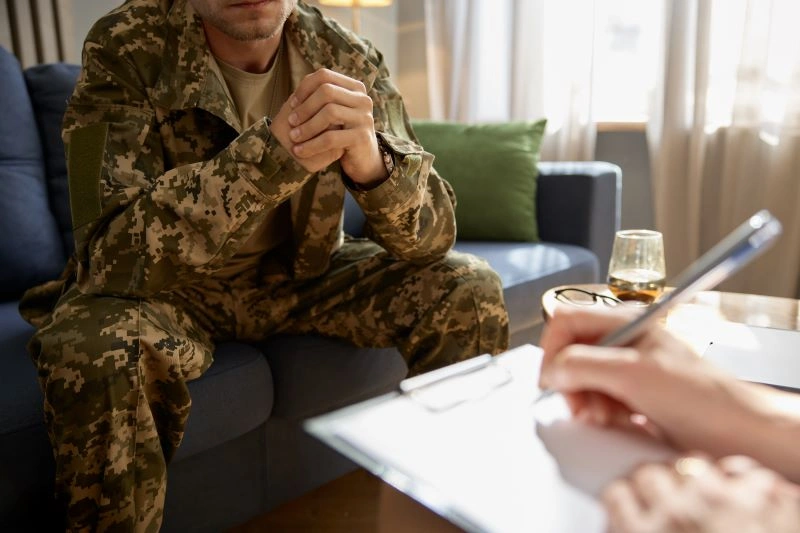
Specialists help soldiers articulate what they’ve experienced, reframe their identity outside of uniform, and build practical coping tools for the civilian environment. They also act as translators of a sort — helping families understand what the returning soldier has been through, and helping the soldier understand what changed at home while they were gone.
Critically, a 2023 PMC study on military occupational designation and PTSD risk concluded that occupation is a meaningful factor in post-deployment mental health outcomes — and that targeted, occupation-specific interventions can reduce psychological risk. This supports the case for specialized mental health resources that understand the occupational context of military service, not just the clinical symptoms in isolation.
For soldiers transitioning entirely out of the military, specialists also help bridge the gap to civilian employment, connecting them with resources, referrals, and support systems that smooth the shift from service to civilian career.
Why Mental Health Readiness Is Part of Military Readiness
Psychological readiness and operational readiness aren’t separate categories — they affect each other directly. A soldier managing untreated PTSD, depression, or severe anxiety is not performing at full capacity. Neither are the colleagues and families around them.
The mental health specialist army units rely on is not a luxury add-on to the military health system. These specialists are a structural part of how the Army maintains a functioning, resilient force over time. Their work — much of it quiet, conducted in small offices or field tents — has measurable effects on retention, unit cohesion, and the long-term well-being of the people who serve.
If you’re a soldier or military family member dealing with mental health challenges, reaching out to your installation’s behavioral health services is a sign of strength, not weakness. The specialists there are trained specifically for your context — and they’re there precisely because what you’re carrying matters.
