When a baby seems persistently distressed, withdrawn, or struggles to connect, most parents’ first instinct is to call the pediatrician. That’s a reasonable starting point — but there’s another kind of professional who may be even better suited to help: an infant mental health specialist. These clinicians focus specifically on the emotional and relational world of babies and very young children, a space that general practitioners often don’t have the specialized training to address in depth.
This article is written for parents and caregivers who are wondering whether their infant might benefit from this kind of support. It covers what these specialists actually do, when to consider reaching out, what the process looks like from the first appointment onward, and why getting help early tends to make a meaningful difference.
What Is an Infant Mental Health Specialist?
An infant mental health specialist is a trained clinician whose work centers on the social and emotional development of children from birth through age five — and on the relationships that shape that development. Their background typically includes advanced training in infant-caregiver attachment, early brain development, trauma-informed care, and emotional regulation in the first years of life.
How They Differ From Pediatricians and General Therapists
This is where a lot of confusion starts, so it’s worth spelling out clearly.

Pediatricians are trained in physical health and general developmental milestones. They’re an important first contact when concerns arise, but their appointments are brief and rarely include an in-depth assessment of the relational dynamics between a caregiver and child. General therapists, on the other hand, may have strong skills with older children or adults but lack the specific lens needed for infants, who can’t use language to communicate their distress.
An infant and toddler specialist fills that gap. They’re trained to read non-verbal cues — an infant’s gaze, muscle tone, cry patterns, how they respond to being held — and to observe the quality of the interaction between parent and child. That relational focus is what sets the work apart.
Professional | Primary Focus | Works with Infants Specifically? |
Pediatrician | Physical health & milestones | Rarely in-depth |
General therapist | Verbal therapy, older children/adults | Not typically |
Emotional regulation, attachment, and early relationships | Yes — this is their core focus |
Why Seek an Infant Mental Health Specialist?
Not every fussy baby or difficult sleep phase warrants a specialist. But some patterns go beyond typical newborn adjustment, and parents often know — somewhere — that something feels off.
Signs That May Prompt a Referral
The following behaviors can be worth discussing with a specialist, particularly when they persist over time or significantly affect daily functioning:
- Extreme difficulty being soothed, even with consistent, responsive caregiving
- Feeding or sleeping problems that don’t resolve with routine adjustments
- Avoidance of eye contact or limited response to the caregiver’s face and voice
- Flat affect — a baby who rarely shows joy, curiosity, or engagement
- Significant regression after a transition, trauma, or loss in the family
- Caregiver-infant relationship strain, including a parent feeling disconnected or overwhelmed
It’s also worth noting that an infant and toddler specialist isn’t only called in when something is clearly wrong. Some families seek support preventively — especially when there’s a history of parental depression, early trauma, or high stress in the household. The relationship between a caregiver’s emotional state and the infant’s development is close and well-documented, which makes early support genuinely protective.
The value of catching these issues early is significant. A systematic review published by the NIH found that Infant and Early Childhood Mental Health Consultation was associated with measurable improvements in child behavior, teacher-child interactions, and caregiver self-efficacy — underscoring that early, targeted support produces real, lasting outcomes.
What to Expect When Seeing a Specialist
Walking into a first appointment without knowing what’s coming can feel unsettling, especially when the patient is a baby who can’t speak for themselves. Here’s what the process generally looks like.
The Initial Consultation
The first session is largely about gathering context. The specialist will ask about the pregnancy and birth, the infant’s temperament and developmental history, how feeding and sleeping are going, and what the family environment looks like. They’ll also ask about the caregiver’s own well-being — not intrusively, but because parental mental health and infant behavior are deeply intertwined.
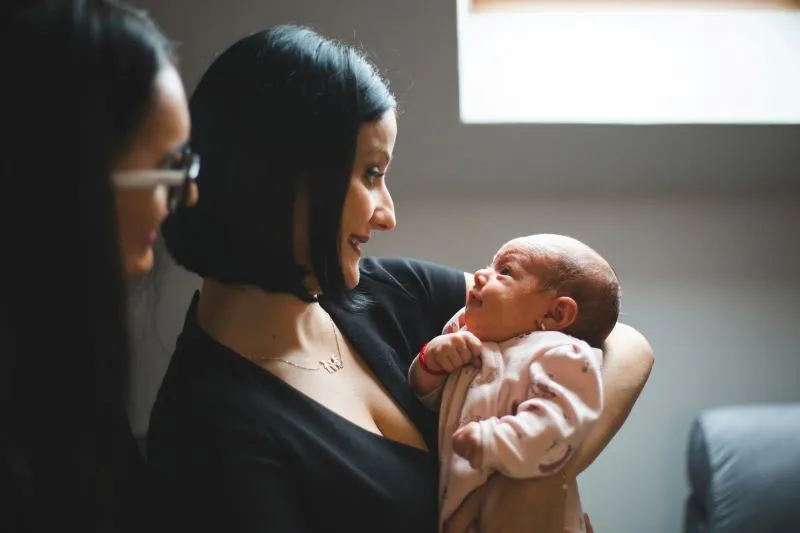
Don’t be surprised if the specialist spends as much time watching how you interact with your baby as they do examining the baby directly. That observation is intentional and central to how they work. As noted by Children’s Hospital Los Angeles, specialists observe infant cues like cry tone, eye gaze, and facial expressions — as well as how easily the child can be soothed and whether the parent-child interaction includes joy and playfulness.
The Assessment Process
After the initial meeting, the specialist may conduct structured observations across a few sessions before forming a clear picture. They’re assessing:
- The infant’s developmental profile — including sensory processing, motor patterns, and early social responsiveness
- Attachment quality — whether the infant uses the caregiver as a secure base, and how the caregiver responds to distress signals
- Environmental factors — family stress, household dynamics, any recent changes or losses
This isn’t a quick checklist. It’s a relational process that unfolds over time, which is why parents are encouraged to be patient with it.
Treatment Approaches
Once the assessment is complete, treatment is typically tailored to what the evaluation reveals. Common modalities include:
- Dyadic therapy — sessions where the caregiver and infant are seen together, and the therapeutic work happens through their interaction
- Developmental guidance — practical support around sleep, feeding, or behavioral challenges rooted in developmental knowledge
- Parent-focused support — sometimes a parent’s own history or mental health needs to be addressed as part of helping the infant
- Coordination with other providers — speech therapists, occupational therapists, or pediatricians may be brought into the plan when needed
The intensity varies considerably. Some families need only a handful of sessions; others benefit from more extended work, particularly when early trauma is involved.
Why Early Care Sets the Foundation
The first three years of life are unlike any other period in human development. Neural connections form at a pace that will never be matched again, and the relational experiences an infant has during this window — how consistently their needs are met, whether they feel safe, how attuned their caregiver is — shape the architecture of the developing brain.
Common Concerns and Myths Worth Addressing

“My baby is too young to have mental health needs.” This one is surprisingly persistent. But emotional development begins at birth — arguably before. Infants experience fear, joy, comfort, and distress. They form attachment bonds and are affected when those bonds are disrupted or insecure.
“Seeing a specialist means I’ve failed as a parent.” Actually, the opposite is closer to the truth. Seeking help early, before small difficulties compound into larger ones, is one of the most proactive things a caregiver can do. An infant toddler specialist isn’t there to judge — they’re there to support the relationship.
“These things resolve on their own.” Sometimes they do. But when they don’t, time matters. The longer certain patterns go unaddressed, the more they become embedded in the child’s developing nervous system and sense of self. Early intervention has repeatedly been shown to produce better outcomes than waiting.
When Concern Is Enough Reason to Reach Out
Concerns about an infant’s emotional development can feel isolating — partly because the field of infant mental health is still relatively unknown to many families, and partly because it can be hard to articulate what’s worrying you when your child can’t yet talk.
Reaching out to an infant mental health specialist doesn’t require certainty that something is wrong. It requires only a willingness to look more closely at something that matters deeply. The earlier a family gets support, the wider the window of opportunity — and the more the intervention can work with the infant’s still-forming brain rather than against already-established patterns.
If concerns about emotional development, attachment, or behavior in a young child are present, connecting with a local infant-toddler specialist is a step worth taking. Pediatricians, early intervention programs, and community mental health centers are all reasonable starting points for referrals.
