Not everyone processes their inner world through conversation. Some people sit in therapy sessions searching for words that never come, or worse, find that the words they do have feel like poor translations of what’s actually happening inside them. The real experience sits somewhere deeper, somewhere language doesn’t quite penetrate.
Expressive arts therapy sidesteps this problem entirely. Rather than forcing everything through the narrow channel of verbal communication, it opens up painting, movement, music, drama, and writing as legitimate languages for the psyche. And here’s the thing—it’s not about talent or creating something Instagram-worthy. It’s about letting your hands, body, and creative impulses say what your mouth can’t.
What Is Expressive Arts Therapy and How Does It Work?
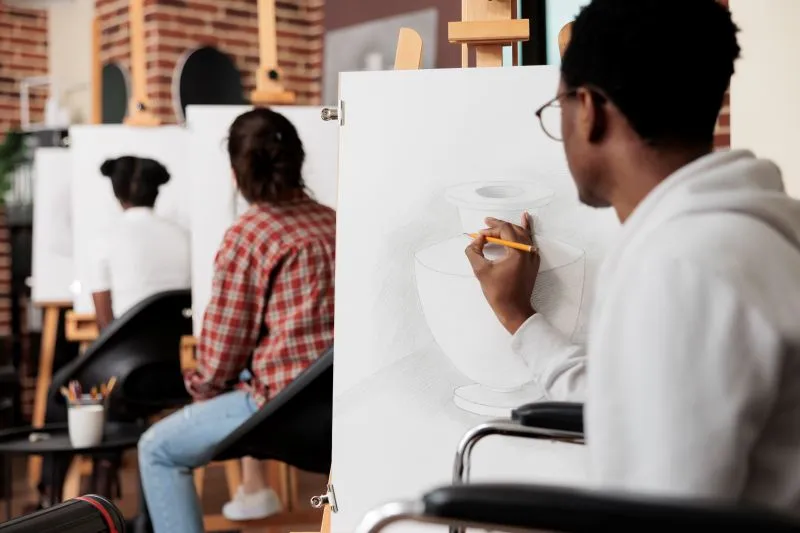
Understanding who thrives with this approach requires first grasping what makes it different from other therapeutic methods.
Defining Expressive Arts Therapy
Expressive arts therapy weaves together multiple creative forms within a single therapeutic relationship. You might start by sculpting clay about a difficult relationship, then write a letter to that sculpture, then move your body in response to what you wrote. This switching between mediums—called intermodal transfer—is the secret sauce. Each art form reveals different facets of your experience, like turning a prism to catch new angles of light.
This stands apart from therapies focused on just one medium. A music therapist works exclusively with sound. An art therapist sticks with the visual arts. The intermodal approach refuses to stay in one lane, recognizing that sometimes what you can’t paint, you can dance. What you can’t write, you can sing.
Expressive Arts Therapy vs Expressive Art Therapy
The language gets a bit fuzzy here. “Expressive arts therapy” with the plural “arts” technically means the intermodal approach using multiple creative forms together. “Expressive art therapy” in singular sometimes refers to any therapy incorporating creative expression, including single-medium work.
Honestly, when people search “what is expressive art therapy” or “what is expressive arts therapy,” they’re usually just trying to figure out how making stuff connects to mental health. Both terms gesture toward the same core idea: your emotional life doesn’t have to be wrestled into sentences to be valid or healable.
Why Expressive Arts Therapy Is Effective Beyond Words
Your brain isn’t a filing cabinet with everything neatly labeled and ready for discussion.
Accessing Emotions Stored Outside Conscious Language
Much of what you’ve lived through—especially the overwhelming or very early stuff—got encoded in your body, your sensory system, your muscle memory. It never passed through the language centers of your brain.
When something happened before you could speak in full sentences, or when an experience was so intense your brain couldn’t process it normally, those memories don’t sit around waiting to be talked about.
This is where creative expression becomes genuinely useful, not just decorative. When you spontaneously choose red paint over blue, when your body moves in a particular way during improvisation, when you build something with your hands—you’re accessing neural pathways that have nothing to do with vocabulary. Sometimes an image drawn without thinking reveals more than a year of carefully chosen words ever could.
Regulation, Safety, and Self-Exploration
Here’s something crucial about expressive arts therapy: it comes with built-in brakes. If talking directly about your childhood trauma feels like standing too close to a fire, painting an abstract representation of it gives you distance. The artwork holds the intensity for you. You can look at it, change it, cover parts of it up, even shove it in a drawer if needed.
This safety valve makes expressive art therapy particularly valuable for people who’ve had bad experiences with therapy before—those who’ve been retraumatized by processing things too fast or too directly.
Individuals Who Struggle to Verbalize Emotions
Plenty of articulate, intelligent people simply don’t access their emotional lives through language.
People Who Feel “Stuck” or Emotionally Blocked
You know something’s wrong. You feel it in your chest, your stomach, the quality of your sleep. But when someone asks what’s bothering you, your mind goes blank. Traditional talk therapy can become an exercise in frustration—sitting there feeling like you’re failing some test you never studied for.
What is expressive arts therapy for people like this? It’s permission to stop trying to verbalize first. Create something—mess around with paint, move your body, make sounds—and see what shows up. Often, the meaning arrives after the making, not before. Your hands knew before your head did.
Common signs you might benefit from expressive art therapy if you struggle with verbalization:
- You regularly sa,y “I don’t know how to explain it” when describing feelings
- Your emotions show up as physical sensations you can’t name
- You shut down or get irritated when pressed to discuss difficult experiences
- You default to “fine” when you’re clearly not fine
- You process better alone through activities than through conversation
Clients Who Feel Pressured or Judged in Talk Therapy
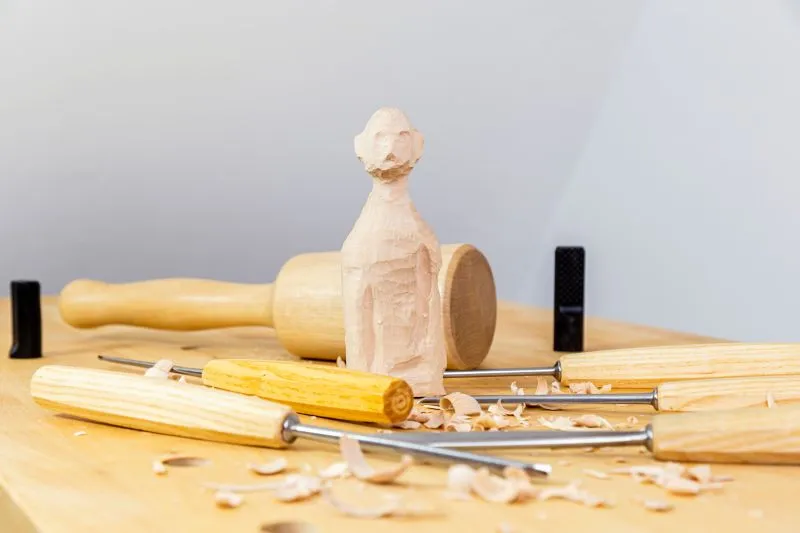
Some people never feel safe enough to be vulnerable with words. Maybe they grew up in homes where sharing feelings got weaponized against them. Maybe they’ve internalized harsh self-criticism about how they express themselves.
When therapy shifts focus to the creative process, the performance pressure dissolves. Nobody’s evaluating your eloquence when you’re arranging objects on a table or layering colors on canvas. For people who’ve felt scrutinized their whole lives, this shift can be profoundly liberating.
Children and Adolescents
Young people don’t just benefit from expressive arts therapy—in many ways, it’s the therapeutic approach that actually matches their developmental reality.
Developmental Reasons Expressive Arts Therapy Works for Youth
Children’s brains haven’t finished building the neural architecture for complex emotional vocabulary and abstract thinking. A nine-year-old might feel anxious about their parents fighting, but lack any framework to articulate “I’m experiencing anticipatory anxiety about family dissolution.” They can, however, draw their family as animals, or build the inside of their house with blocks, or move as each family member moves.
More than that, play is how children naturally process reality. They don’t sit around analyzing their feelings—they act things out, build things, destroy things, pretend. When therapy incorporates creative elements, it stops being this weird adult thing imposed from outside and starts speaking the language kids already use to make sense of their world.
Teenagers face their own challenges. They’re drowning in intense emotions they don’t yet have maps for, while simultaneously trying to figure out who they are, separate from their parents. Expressive arts therapy lets them explore identity and feeling without requiring premature certainty.
A teen can create a self-portrait in fragments, or write angry music, or choreograph the chaos they feel inside—all without needing to explain themselves in therapy-speak they haven’t mastered yet.
Common Challenges Addressed Through Expressive Arts Therapy
Young people seek out what is expressive arts therapy for issues that resist conventional treatment approaches.
Trauma and grief hit kids especially hard because they lack not just the words but the cognitive frameworks to process loss, abuse, or major life upheaval. A child who witnessed violence doesn’t need to recount the event repeatedly—they need to work through it at their own pace, through play and creativity that lets them approach and retreat from the material as needed.
Behavioral and emotional regulation issues show up constantly in children dealing with anger, anxiety, or impulsivity. These kids don’t need more lectures about calming down. They need embodied practices that teach their nervous systems how to recognize and modulate intensity.
Social and communication difficulties respond remarkably well to creative therapeutic approaches. Kids with autism, selective mutism, or social anxiety can connect and express themselves through art-making without facing the specific demands of typical social interaction that overwhelm them.
Additional Groups Who Find Healing Through Creative Expression
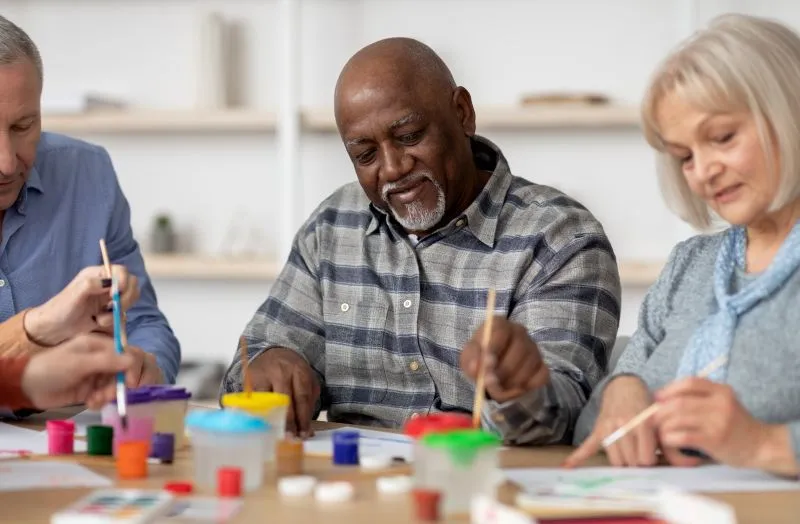
The benefits extend well beyond those who struggle with words and young people still developing verbal capacity.
Adults Managing Chronic Stress and Burnout
When you’ve been running on empty for months or years, you lose track of your own internal experience. Someone asks how you’re doing, and you genuinely have no idea. Expressive arts therapy helps burnt-out people reconnect with themselves without the added burden of having to analyze everything immediately.
Sometimes you need to just make something with your hands and let your body interrupt the constant mental chatter.
People Recovering from Trauma
Trauma survivors often describe therapy as retraumatizing when it requires repeatedly narrating what happened. The creative distance in what is expressive art therapy changes this dynamic completely.
Why expressive arts therapy works particularly well for trauma survivors:
- It bypasses the need to verbally recount traumatic events over and over
- Creative processes can access body-based memories that don’t have narratives
- Making something tangible rebuilds the sense of agency that trauma destroys
- Sensory engagement activates grounding in present-moment reality
- Creating provides concrete evidence that you’ve survived and can still make things
Individuals with Neurodevelopmental Differences
Brains that process information differently often struggle in environments designed for neurotypical communication styles. People with autism, ADHD, or other neurodevelopmental differences frequently find sensory-based creative activities far more accessible than sitting still and maintaining eye contact while discussing abstract emotional concepts.
Those Experiencing Grief and Loss
Grief makes language feel absurd. How do you capture the weight of absence, the specific way someone laughed, the hole that’s now where a person used to be? Creative expression doesn’t try to contain or explain grief. It lets grief be as large and strange and contradictory as it actually is. You can paint rage and longing in the same image. You can move through sorrow without articulating it.
Finding Your Creative Path to Healing
You don’t need verbal fluency to heal. If traditional therapy hasn’t clicked for you, if you’re supporting a young person who needs a different approach, or if some part of you simply recognizes that creativity might access what conversation can’t—this path exists. The only real question is whether you’re willing to try it.
